
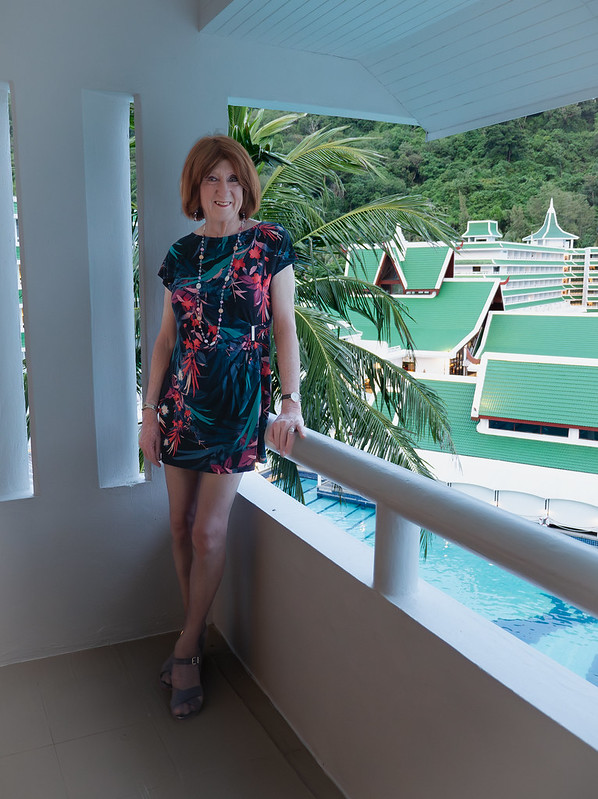

Martina
Forum Replies Created
-

Two years ago, I threw out a couple of favorite skirts because I was too big for them and I believed that getting older meant getting fatter and there was no escape. Now I know that is not true and wish I could get those lovely skirts back. In fact I take one size smaller in both skirts and dresses than I did before and people envy my figure. I am 71, so I am allowed to brag!
Initially my strategy was directed at heading off brain cognitive diseases such as Alzheimer’s, Parkinson’s and dementia, while increasing longevity and general good health; it just so happened that this strategy also resulted in weight loss without any real damage to my enjoyment of life.
A lot of people talk about losing weight but often do little about it (I call them the NATO people – No Action Talk Only) or what they do is ineffective.
What I do I call a “discipline”, not a “diet”. Diets generally fail because they focus too much on food and have a tendency to make one’s life miserable. I have never counted calories, never!
In a nutshell, this is what I do:
1. Keep fit. I run, walk, swim and do exercises for over an hour four days a week. The other days I just walk and suggest a minimum of 30 mins brisk walking each day. Go on, it won’t kill you!
2. I do two 16 hour fasts a week on Mondays and Thursday, which basically means leaving out breakfast only drinking water between dinner and lunch the next day. Look up Dr Michael Moseley’s 2:5 intermittent fasting technique for further info.
3. Cut down as much as you can, al least by half, on the bulk carbohydrates: bread, rice, pasta, potatoes and the real poison sugar. Most foods contain carbohydrate anyway; for example, garden peas are high in carbohydrate, so why add more. Of course, I still eat all of those things but in much reduced quantities, but I never add pure sugar to anything. Finely chopped cauliflower can be used as a rice substitute and you don’t feel like you weigh a tonne when you get up from the table. Trust me, doing this I eat heartily; I never starve myself except briefly for those two missed breakfasts.
4. Set yourself a goal weight range, in my case 64-66 kg and eat up when you go too low and be a bit harder on yourself when you go over.
5. Be sensible, it really isn’t that hard.Lastly, watch this video; it is really worth the 16 minutes: TED Talk: Why fasting bolsters brain power
Just for the record, it only took me about 6 weeks to lose 7 kg. Now I want those skirts back!
-
Caroline, I tried to access your link three times but each time got a warning saying “This website has been reported as unsafe”.
-
Perhaps a consultation with a psychiatrist who is also transgender might provide a more empathic reception. I wonder.
I actually have a French friend who fits that bill and have been passing on parts of our discussion here. Her first response (in fractured English) is as follows:
“I read your email at the middle of night, I was still working finishing to
write a chapter on Emotions and cognitions in bipolar disorder.
First of all I agree with the document there are more psychiatric
illnesses in “transgenders, transvestites ” mainly bipolars.
On the other hand I was as psychiatrist in GRS several time but never in
my patients they wanted to go back as they were previously.
I took a lot of time to help their decision, most of them do not have GRS
but only feminine hormones and anti androgens, and ask to change identity.
It is very often the right solution.”(I have made some minor amendments to correct the spelling.)
-
The first person I approached regarding this topic was an old friend who had undergone SRS and cosmetic surgery in Bangkok and has continued to lead a mostly happy and productive life, but of course never completely without any pitfalls or anxiety. I shall refer to her as Suzy (her pre-transition name). Here are her comments:
QUOTE:
There is certainly mental anguish when we are at the pre-transition stage and many have the belief that once the operation is complete and we have the physical attributes and all the documents to confirm we are female (such as a revised birth certificate), then all our problems are over. The sad thing is, transition isn’t the end of the journey – in many ways – it’s just the start.
After transition there is no going back to the safe male persona whenever we feel inadequate. That bridge is well and truly burnt and we can only now go forward into the female role.This is where more mental anguish can develop and continue.
The answer is planning and preparation.
Mannerisms, style and most of all voice therapy must be in place before full transition. The 12 months that we are expected to live 24/7 as a female, is not so much a hoop that we have to jump through to convince the psychiatrist, but a training ground for us to hone our skills. It doesn’t matter that we’ve always felt female, but we need to unlearn all the male behaviours we had developed over the decades.
It has to be said that even with all that in place, sometimes nature deals us a poor hand. If you are overly tall with very masculine features then you won’t have such an easy ride than someone who is shorter and has naturally soft features. It’s a very unfair situation.Now in my own position, I went post op in 2010 and would say I’ve had an easier ride than most. I’ve been fortunate in that I have had a lot of help and support by a close female friend, but I have also gone to great lengths to make sure I succeed.
Do I have mental anguish now after all these years? – To a certain degree I am always on alert. In the place where I’ve now worked for 6 years, no one has a clue to my background. I’ve told no one there of my past. I don’t think it’s because I’m ashamed, or feel I would no longer be accepted, but I feel my past was simply a private medical condition, which is now all fixed up and it’s no one’s business.
With this in mind, whenever I’m in conversation I have to be careful when I talk of my past. It could be easy to slip up in the early days, but now it’s not a problem.
Another area I’m always monitoring is my voice. Occasionally as I’m driving to work, I find myself singing through the scales, getting higher and higher, just to make sure my voice is in tune with a female.
After all these years, speaking with a female pitch comes quite naturally – so naturally in fact that sometimes I worry that I’ve dropped back into some male frequency.
So I think although I don’t suffer from mental anguish, I do have this monitoring going on in my head in the background. I don’t think it’s a big problem as after all these years I’m still pretty stable.We do hear a lot of examples where after transition we end up with lower paid jobs, or even unemployed. I have been fortunate in that my employer at the time of my transition was very supportive.
However eventually I left that job for other reasons.
In my present employment, the position is much more senior and with far more responsibility than any job I’ve had before.
It’s ironic that now I’m a female, my salary is far higher than it ever was as a male.
UNQUOTEIn a PS Suzy added “It’s been good therapy actually going through this.”
Of course everyone is different, as are their circumstances, and it seems to me that Suzy might be the more rare example in that she seems to have discarded her past in order to lead a completely new life as a woman. I am sure that very few people would be able to do that, primarily because our lives are usually interwoven with family, friends and our local environment which, I assume, most are reluctant to give up. So the mental stresses and strains on Suzy might be rather different to those who choose a very different path.
Let me give you the example of Stephanie (not her real or adopted name). As a male, John (not real name) worked as a scientist in a research facility; I was a distant work colleague but we had no interaction as we worked in offices located in different parts of the country and our paths rarely crossed. However, one day, I learnt that John had undergone SRS and was now back at work as Stephanie. Years later, I asked one of the other male scientists, Stan, what he had thought about it at the time. (Stan does not know of the existence of Martina.) Stan replied that it had been no problem at all because John had told everyone in the facility what was about to happen before the event; his intentions were completely transparent, open and honest.
So there were no shock-horror revelations and Stephanie could perhaps be termed a “declared trans-sexual” (as opposed to those who avoid any recognition of their previous gender).
I have no idea what anguish or mental trauma Stephanie experienced during this process, but I wonder if a person (MTF or FTM) who declares their new status to all who know them may escape some of the angst that a person who is trying to hide the change may suffer. It is certainly something to consider.
Sorry if I am meandering but it is a complex subject. Now I will seek out my next victim – watch this space.
-
Thank you Adrian. That is all very thought provoking and I would like to add to the discussion. Before doing so, I have at least four people in mind to contact to get their views on the issues you raise. They are all transgender and two are post-SRS, so I am interested in their reactions to the stones you have unturned. One is a Professor of Psychiatry whose speciality is mental illness. Only one of the four is Australian and none are members of TGR. I will let you know if any of them have anything worthy of repetition.
I do remember a media article from 2012 about a teenager who changed from boy to girl, regretted it and changed back.
Ria Cooper
The media love negative stories, so there is always a suspicion that the statistics are distorted or even subject to a generous dollop of confirmation bias.More later.
-
No problem Fay. Please go ahead and use any of the photos as you see fit.
-
Sorry I’ve been a bit quiet too, but I have been buried in my study aka “the dark room” processing what photos I could salvage from our spectacular event in Melbourne. Friday’s reception presented a particular challenge because of the, at times, poor and uneven light; although my new camera makes some excellent imagers overall, it is not as good at seeing in the dark as my old full-frame DSLR. However, here are what did surface from that night:
Saturday night was much more agreeable to photographers with a lot more available light and there are some interesting and incriminating pics from our star performers. The last shot is me at the group photo; for some reason I was the only one who showed up! Hope you like them:
I will post them eventually on Facebook, so if anyone is worried about that please let me know quickly.
-
So sorry you missed this event Caroline. I am sure it exceeded even the organisers’ own expectations. For me, it was truly a wonderful experience and even before it was announced that there would be a repetition, in of all places, Katoomba, I had bought the dress for the next return match! Can’t wait for next October.
-
Your story is fairly typical, Paula. Unfortunately, wigs involve a long and often expensive learning curve. I know it took me several years and a lot of money before I found what worked for me, but now I have three excellent wigs and unless one of them falls apart, I don’t anticipate buying any more. Be brave and be careful but never stop until you find what you want. There is a wig for you out there somewhere; you just have to find it.
By the way,my three wigs are human hair and they have all been cut and styled to suit my face. None of them were much good in their original form.
I wish you luck with your quest.
-
Thanks Caroline. On a similar theme this TED-talk by Wendy Suzuki is both entertaining and informative; it concerns the benefits of physical fitness to the brain. In the light of some recent research from Canada, I think she underplays it a bit, because there is mounting evidence that keeping fit is far more important to brain health than previously thought, but it is still a good talk.
-
Thank you Caroline. I am also a fan of TED talks and not only in respect to Trans issues. One that has been a great influence on me is a TED talk by a neuroscientist about how intermittent fasting can be of significant benefit to the brain and the discouragement of brain cognitive diseases such dementia, Alzheimer’s and Parkinson’s. It is also a great way to lose and control weight.Fasting and the Brain TED Talk
-
Good idea
-
I have been to a monthly restaurant night at Tuggerah (advertised on the Seahorse website) and some Newcastle girls also had a restaurant night weekly I think, but I am not aware that they still happen.
-
Dear Emma, you have not met my boy version who avoids people and wants to crawl into the cracks in the walls when they are around and try and get him to venture onto a dance floor and he runs a mile! Martina, on the other hand, is a different person and loves to be the centre of attention and dance the night away. Funny girl! xx
-
I certainly agree with all you say Emma. I find the ain’t-it-awful mob take all the energy out of the room with their pithering and mithering while generally blaming everyone except themselves for their woes. My message to them is “get over it and get on with life!” There is too much to do to sit around worrying about what is going to happen next; far better to get out there and make it happen.
It is a statistical fact that happy optimistic people live longer. Unfortunately, we live in a world where there are negative people and positive people; I count myself among the latter and avoid the former .It is often quoted that the only people who make money on the stock market are optimists.
I am so ancient, I actually remember a story published in a magazine or newspaper years ago claiming that, when times are good, hemlines go up and when they are bad, hemlines go down. The reason given was that in good times women feel more confident about showing their legs and flaunting themselves a bit. Perhaps there is some truth in that. But I don’t care what the times are doing, I thoroughly enjoy the shorter lengths and as far as I am concerned times are always good!
The only difference I see between you and me is that you are an extreme extrovert but I am definitely close to being an extreme introvert, albeit that wearing a short skirt aided by a couple of glasses of wine can bring out the extrovert in me!